



The modern electronics industry is experiencing rapid transformation driven by artificial intelligence, smart devices, automation, and connected technologies. While passive components provide stability and support within electronic systems, active components serve as the core elements that enable intelligence, control, and advanced functionality. From smartphones and industrial machines to electric vehicles and AI-powered devices, active components are responsible for processing information, controlling operations, and enabling communication between different parts of a system.
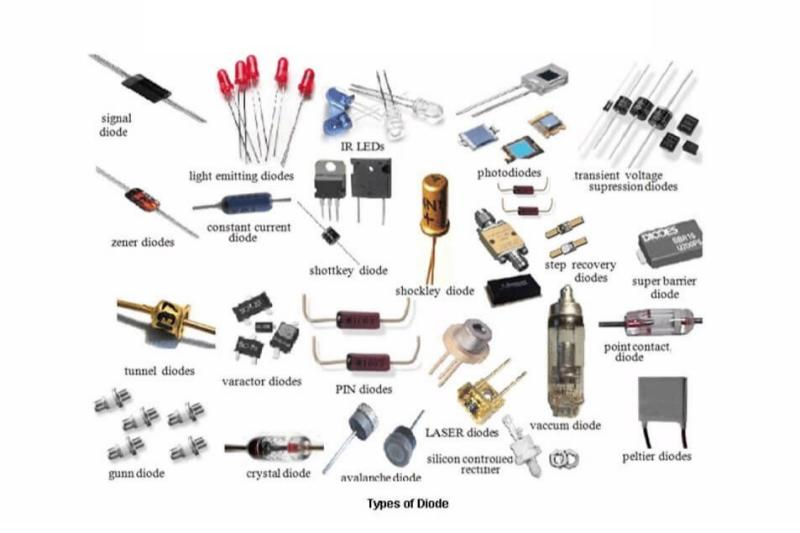
Active components are electronic devices that require an external power source to operate and can control electrical signals or perform complex functions. Unlike passive components such as resistors, capacitors, and inductors, active components can amplify signals, switch electrical states, process data, and execute programmed instructions. Common examples include microcontrollers, microprocessors, sensors, transistors, integrated circuits, memory chips, and power semiconductor devices.
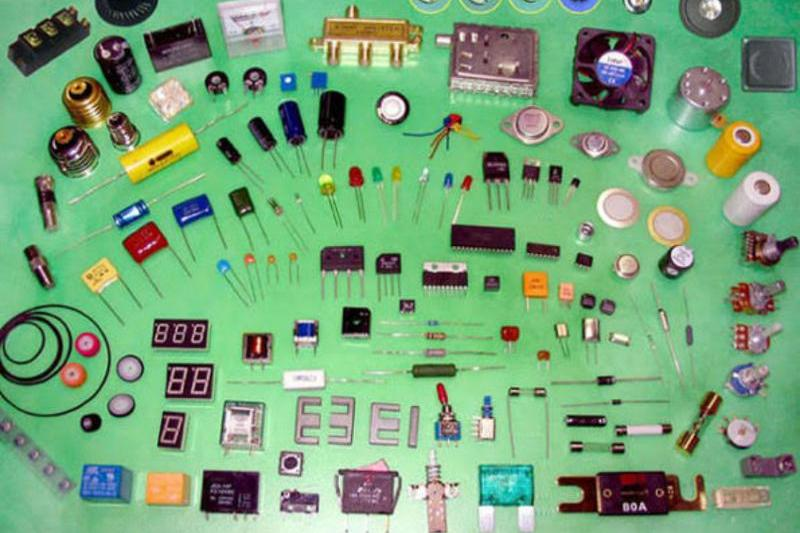
As electronic products become increasingly intelligent, the demand for advanced active components continues to grow. The development of artificial intelligence, Internet of Things (IoT) devices, robotics, autonomous vehicles, and smart manufacturing systems has accelerated innovation in semiconductor technology. Manufacturers are constantly developing components with higher processing capabilities, lower power consumption, smaller form factors, and improved reliability.
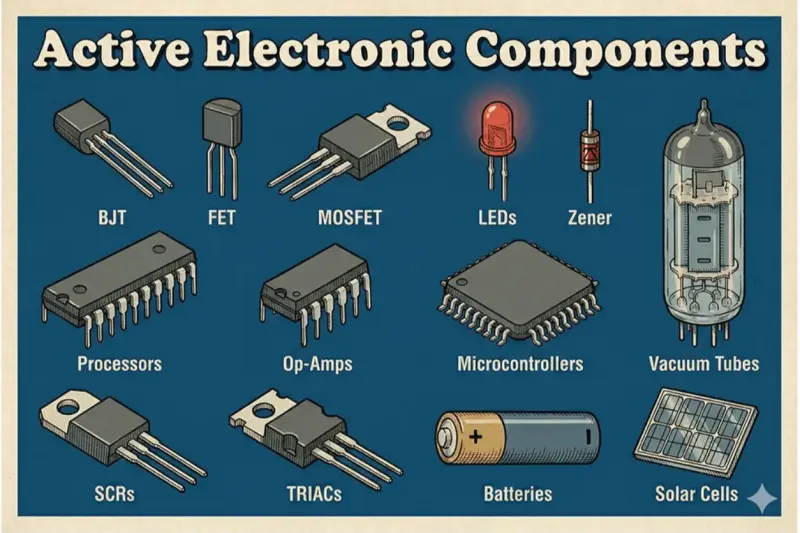
Microcontrollers are among the most widely used active components in modern electronics. These compact integrated circuits contain processors, memory, and input/output interfaces, allowing them to control specific functions within electronic products. They are commonly found in smart home devices, wearable electronics, consumer appliances, industrial controllers, and automotive systems.
For example, a smart wearable device may use a microcontroller to collect sensor data, manage Bluetooth communication, control power consumption, and process user commands. In industrial automation systems, microcontrollers help control motors, monitor equipment conditions, and communicate with other machines. Their flexibility and affordability make them essential components for a wide range of applications.
Microprocessors and advanced computing chips represent another important category of active components. These devices provide powerful computing capabilities required for demanding applications such as artificial intelligence, cloud computing, autonomous driving, and high-performance industrial systems.
The rapid expansion of AI technology has created significant demand for advanced processors and specialized computing solutions. Modern AI applications require enormous amounts of data processing, which has encouraged semiconductor companies to develop more powerful and efficient chips. Graphics processing units (GPUs), neural processing units (NPUs), and other AI accelerators have become increasingly important in applications ranging from smart cameras to autonomous robots.
Sensors are also playing a critical role in the development of intelligent electronic products. As devices become more connected and automated, they need the ability to detect environmental changes and collect real-time information. Sensors convert physical conditions such as temperature, pressure, motion, light, and sound into electrical signals that can be processed by active components.
In consumer electronics, sensors enable features such as facial recognition, motion tracking, health monitoring, and voice interaction. In automotive applications, sensors support advanced driver assistance systems, vehicle safety functions, and autonomous driving technologies. Industrial systems rely on sensors for predictive maintenance, process monitoring, and automation control.
The automotive sector has become one of the fastest-growing markets for active components. Modern vehicles contain hundreds of electronic control units and thousands of semiconductor devices. Electric vehicles, in particular, require advanced active components for battery management, motor control, charging systems, and communication networks.
Power semiconductor devices, including insulated gate bipolar transistors (IGBTs) and silicon carbide (SiC) devices, are becoming increasingly important in electric vehicles and renewable energy systems. These components help improve energy efficiency, reduce power losses, and support higher performance requirements.
However, the increasing complexity of electronic systems has also created challenges for active component development and supply chains. Semiconductor manufacturing requires advanced technologies, expensive equipment, and highly controlled production environments. Any disruption in semiconductor supply can significantly affect global electronics production.
The semiconductor shortage experienced in recent years demonstrated the importance of supply chain management for electronics manufacturers. Companies are now placing greater emphasis on supplier diversification, inventory planning, and long-term partnerships with component manufacturers to reduce supply risks.
For hardware developers, selecting the right active components during the product design stage is critical. Engineers must consider factors such as processing capability, power consumption, operating environment, availability, cost, and future product requirements. A component that works well in a prototype may not always be suitable for large-scale production if supply availability or lifecycle support is limited.
Another important trend in active component development is system integration. Manufacturers are increasingly combining multiple functions into single chips to reduce size, improve efficiency, and simplify product design. System-on-chip (SoC) solutions integrate processors, communication modules, memory interfaces, and other functions into one package, making them ideal for compact electronic devices.
The growth of edge computing is also influencing the development of active components. Instead of sending all data to cloud servers, edge devices can process information locally, reducing response time and improving privacy. This trend is driving demand for efficient processors and AI-capable chips that can operate directly within smart devices.
Future active component development will continue focusing on higher performance, lower energy consumption, advanced integration, and improved reliability. Emerging technologies such as artificial intelligence, autonomous systems, and industrial automation will require increasingly sophisticated semiconductor solutions.
Although consumers often recognize electronic products by their external design and software features, the real intelligence behind these products comes from active components. They provide the computing power, control capability, and communication functions that make modern technology possible.
For electronics companies and hardware manufacturers, understanding active component trends and selecting reliable semiconductor solutions will remain essential for successful product development. As the world moves toward smarter and more connected technologies, active components will continue to serve as the driving force behind electronic innovation.
Post time: Sep-20-2026