



As electronic products become increasingly compact and feature-rich, cable management has evolved from a simple assembly consideration into an important part of product engineering. Whether the application involves consumer electronics, medical devices, industrial equipment, smart home products, automotive accessories, or wearable technology, the way cables are routed, secured, protected, and assembled can directly influence product reliability, user experience, manufacturing efficiency, and long-term durability.
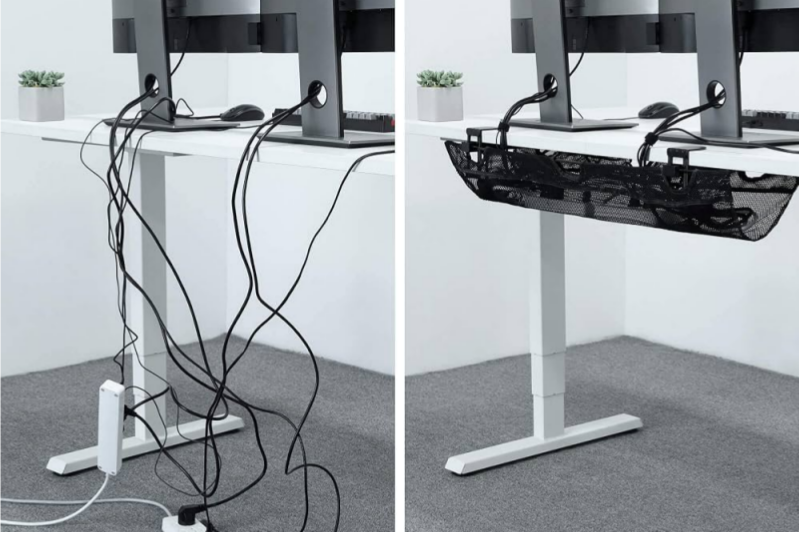
In the early stages of product development, cable management is sometimes treated as a secondary mechanical issue. Designers may focus primarily on the enclosure, PCB, battery, display, and external appearance, while cable routing is addressed later during prototype assembly. However, this approach can create significant challenges when the product moves toward pilot production or mass manufacturing. A cable that fits comfortably inside a prototype enclosure may become difficult to assemble consistently when hundreds or thousands of units need to be produced.
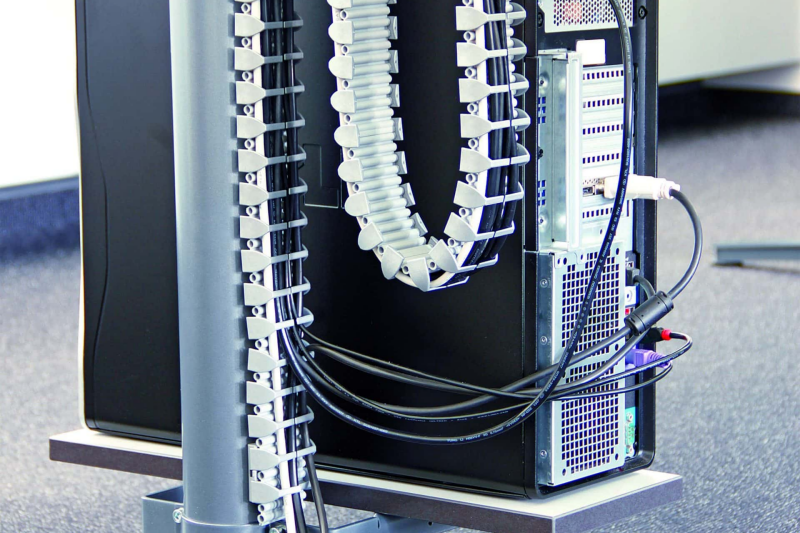
Effective cable management begins with understanding the complete product architecture. Engineers need to consider the location of PCBs, connectors, batteries, motors, sensors, displays, speakers, switches, and other electrical components. The cable routing path should then be developed together with the mechanical structure rather than added after the enclosure has already been finalized.

One of the most important considerations is bend radius. Every cable has a minimum recommended bend radius, and repeatedly bending a cable beyond its acceptable limit can damage conductors, insulation, or connectors. In products exposed to frequent movement or vibration, this issue becomes even more important. Proper cable routing should avoid sharp bends and provide sufficient space for controlled cable movement.
Cable fixation is another key consideration. Depending on the application, cables may be secured using clips, channels, brackets, adhesive solutions, cable ties, molded features, or dedicated retention structures. The best solution depends on the product environment and manufacturing requirements. A cable management structure should hold the cable securely without creating excessive compression or stress.
Connector placement also plays a major role. Connectors should ideally be positioned so that operators can easily access them during assembly while still preventing accidental disconnection during normal product use. If a connector is difficult to reach, assembly time may increase and the risk of incorrect installation may become higher.
From a manufacturing perspective, cable management should follow Design for Manufacturing and Assembly principles. A well-designed product should minimize unnecessary cable crossings, complicated routing paths, and manual operations. When an operator has to repeatedly manipulate a cable through several narrow openings, the assembly process becomes slower and less consistent.
This is particularly important for products containing multiple cables. A complex wiring system can quickly become difficult to manage when several cables have different lengths, connectors, and routing requirements. In these cases, engineers may consider modular cable assemblies, customized wire harnesses, keyed connectors, or standardized cable lengths.
Cable labeling and identification can also improve manufacturing efficiency. For products with multiple similar connectors, clear identification can reduce assembly errors and simplify testing and maintenance. In production environments, even a small improvement in connector identification can make a meaningful difference when multiplied across thousands of units.
Thermal management should not be overlooked. Cables routed close to heat-generating components may experience elevated temperatures for extended periods. Engineers should evaluate the thermal environment and select suitable cable materials and routing paths. Maintaining sufficient separation between cables and heat sources can improve long-term reliability.
Electromagnetic compatibility is another consideration in electronic products. Signal cables, power cables, antennas, and high-current wiring may interact with each other if they are poorly routed. Depending on the application, engineers may need to consider cable separation, shielding, grounding, and routing direction during the mechanical design stage.
Mechanical movement creates additional challenges. Products containing hinges, rotating mechanisms, sliding structures, or moving assemblies require cable routing that can accommodate repeated motion. In these applications, engineers must consider cable fatigue, strain relief, flexing cycles, and potential interference with surrounding components.
A reliable cable management design should also support testing and servicing. During prototype development and production testing, engineers may need access to connectors or measurement points. If cables are permanently hidden behind complicated structures, troubleshooting can become unnecessarily difficult.
The transition from prototype to mass production is often where cable management problems become most visible. Prototype units are usually assembled carefully by experienced engineers, allowing them to compensate for minor design issues manually. Mass production requires a repeatable process that can be followed efficiently by different operators. Therefore, cable routing should be designed with clear assembly steps and adequate tolerances.
Modern product development increasingly uses 3D CAD and digital assembly reviews to identify cable routing problems before physical prototypes are produced. Engineers can evaluate cable paths, interference, bending areas, connector accessibility, and assembly sequences in the digital environment. This can reduce the number of physical iterations required and help identify potential manufacturing issues earlier.
Cable management also contributes to product aesthetics. In consumer products, visible cables or poorly organized internal wiring can affect the perceived quality of the product. A clean internal structure allows designers to create thinner, more compact, and more professional-looking products.
Ultimately, cable management is not simply about making wires fit inside an enclosure. It is an integrated engineering discipline involving mechanical design, electrical architecture, manufacturing, reliability, thermal considerations, and user experience.
For companies developing customized electronic products, considering cable management from the beginning of the design process can reduce assembly complexity, improve reliability, simplify testing, and create a more scalable manufacturing solution. By combining mechanical and electrical engineering at an early stage, manufacturers can develop cable routing structures that are not only functional but also optimized for efficient mass production.
Post time: Sep-07-2026