



Electronics design is at the heart of almost every modern smart product. Whether the product is a wearable device, smart home appliance, industrial controller, medical instrument, IoT product, or consumer electronic device, the electronic system determines how the product senses, processes, communicates, and responds to the world around it.
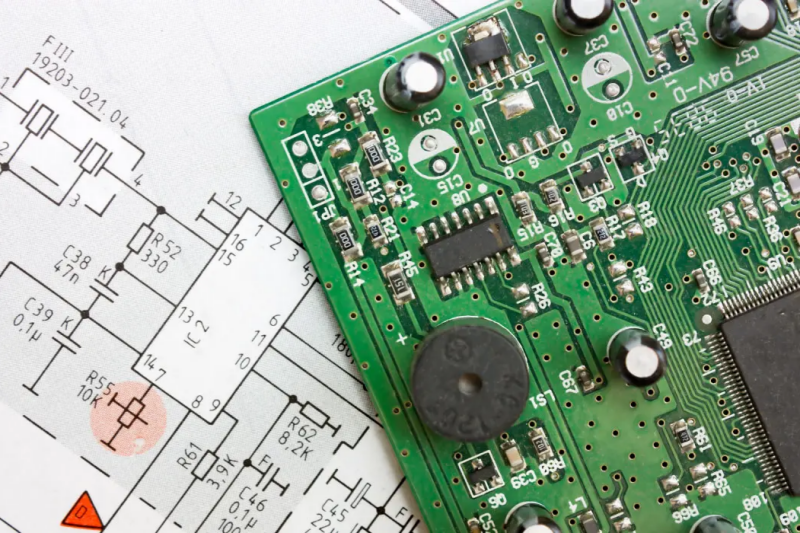
However, successful electronics design involves much more than creating a schematic or laying out a PCB. A production-ready electronic system must balance functionality, performance, power consumption, mechanical constraints, thermal management, reliability, manufacturability, cost, and regulatory requirements.
The first stage of electronics development is defining the product requirements. Engineers need to understand what the device is expected to do, which sensors or interfaces are required, how the product will be powered, how it will communicate, and what environmental conditions it will experience.
A clear system architecture can reduce development risks later. The architecture may include the main processor or microcontroller, wireless communication modules, sensors, power management circuits, memory, user interfaces, connectors, and other functional blocks.
Component selection is another critical part of the process. Engineers need to evaluate not only electrical specifications but also availability, lifecycle status, cost, package size, manufacturing requirements, and supply-chain stability.
Component availability has become an increasingly important consideration in product development. A component that performs well technically may still create production risks if it has unstable supply or limited availability. Therefore, alternative components and second-source strategies can be valuable for products intended for long-term manufacturing.
PCB design must also consider the mechanical structure of the product. The PCB may need to fit into a compact enclosure while leaving sufficient space for batteries, connectors, displays, cables, antennas, and other components.
This is why mechanical and electrical engineering should be closely coordinated. A PCB that is designed without considering the enclosure may create interference with screws, ribs, connectors, buttons, or other mechanical structures.
Thermal management is another important consideration. Processors, power components, wireless modules, LEDs, motors, and charging circuits can generate heat. Engineers need to understand where heat is generated and how it will be dissipated.
In compact products, thermal challenges can become particularly difficult because there is limited internal space for airflow or heat sinks. PCB copper areas, thermal vias, conductive structures, and enclosure materials may all contribute to thermal management.
Power management is equally important, especially for battery-powered products. Engineers need to optimize power consumption during active operation, standby, charging, and sleep modes.
For wireless products, communication technology must be selected according to the intended application. Bluetooth, Wi-Fi, cellular, UWB, NFC, and other technologies offer different combinations of range, power consumption, data rate, and infrastructure requirements.
A product’s antenna design can also significantly influence wireless performance. Antenna placement should be considered together with the enclosure, battery, PCB, metal structures, and other components that may affect radio performance.
Firmware is another essential part of the electronics system. The hardware needs to work together with embedded software to control sensors, communication interfaces, power states, displays, motors, and other functions.
Testing should therefore begin early in the development process. Engineering prototypes can be used to verify electrical performance, identify unexpected interactions, and validate the basic system architecture.
PCB layout is particularly important for signal integrity and electromagnetic compatibility. High-speed signals, sensitive analog circuits, power paths, wireless circuits, and other functional areas may require careful placement and routing.
Good PCB design can reduce noise, improve reliability, and simplify later certification testing. Engineers may need to consider grounding, power distribution, signal routing, impedance control, filtering, shielding, and component placement.
Design for Manufacturing is equally important. A PCB that works electrically may still be difficult or expensive to manufacture if it uses unnecessary complexity, difficult-to-source components, or unsuitable assembly structures.
The PCB assembly process should be considered during design. Surface-mount technology, through-hole components, soldering requirements, inspection access, component orientation, and automated assembly capabilities can all influence the final design.
Functional testing is another important consideration. Production test points, programming interfaces, diagnostic functions, and test fixtures can be designed into the product so that each unit can be verified efficiently during manufacturing.
This becomes especially important during mass production. Engineering teams need to ensure that production operators and automated testing systems can quickly identify defective boards and distinguish manufacturing issues from software or component problems.
Regulatory compliance should also be considered before the final design is frozen. Depending on the target market and product category, the device may need to satisfy requirements related to electromagnetic compatibility, radio performance, electrical safety, environmental materials, or other standards.
Waiting until the final prototype to consider certification can create significant delays. A design that performs correctly in a laboratory environment may still require changes if it fails formal testing.
Prototyping provides an important bridge between concept and production. Early prototypes can validate electrical architecture, while later engineering prototypes can focus on reliability, manufacturability, enclosure integration, and certification readiness.
The transition from engineering prototype to mass production should be managed carefully. BOM optimization, component sourcing, PCB fabrication, PCBA assembly, firmware programming, functional testing, quality control, and packaging all need to be integrated into a repeatable manufacturing process.
Modern electronics development is therefore a multidisciplinary process. Electrical engineering, PCB design, firmware, mechanical engineering, industrial design, manufacturing engineering, testing, and supply-chain management all contribute to the final product.
For companies developing customized electronic products, working with an engineering and manufacturing partner from the early design stage can significantly reduce development risks. Early DFM and DFA reviews can identify potential production problems before tooling and mass production begin.
Ultimately, good electronics design is not simply about making a circuit function. It is about creating a complete electronic system that is reliable, manufacturable, scalable, cost-effective, and ready for real-world use.
By integrating electrical engineering with mechanical design, prototyping, testing, certification planning, and manufacturing expertise, companies can move from an initial product concept to a reliable production-ready solution more efficiently. This integrated approach is increasingly important as modern products become smaller, smarter, more connected, and more complex.
Post time: Sep-07-2026