



The rapid advancement of digital technologies has transformed GPS trackers from simple positioning devices into intelligent solutions that play a critical role across transportation, logistics, construction, agriculture, public safety, and asset management. As businesses continue to embrace digital transformation, the demand for accurate, real-time location data has increased significantly. Modern GPS tracking systems not only provide continuous location updates but also deliver valuable operational insights through cloud connectivity, wireless communication, and data analytics. These capabilities enable organizations to improve efficiency, strengthen security, reduce operating costs, and make faster, data-driven decisions in increasingly competitive markets.
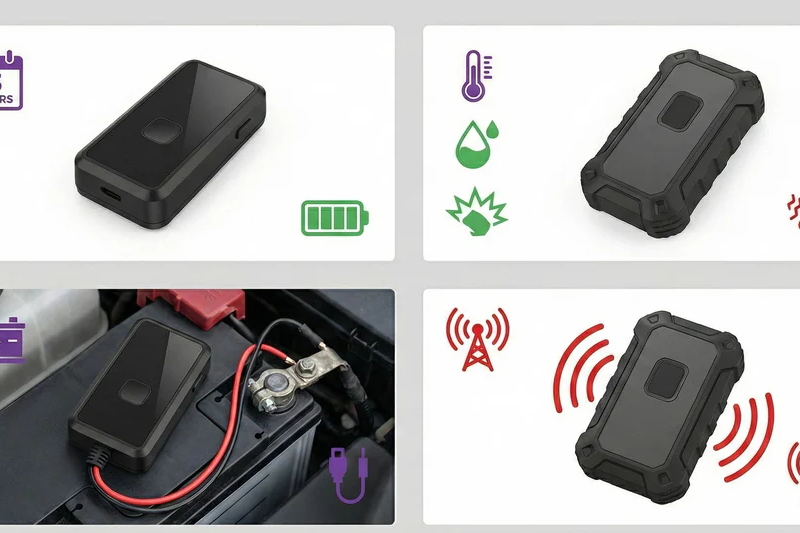
Today’s GPS trackers incorporate multiple satellite navigation systems, including GPS, GLONASS, Galileo, and BeiDou, allowing devices to maintain highly accurate positioning under a wide variety of environmental conditions. By combining satellite positioning with LTE Cat-1, LTE-M, NB-IoT, 4G, and even emerging satellite IoT communication technologies, tracking devices are capable of delivering reliable performance in both urban environments and remote locations. Advances in low-power chipsets, high-capacity rechargeable batteries, and intelligent power management have also extended operating life, making long-term deployment practical for applications where frequent maintenance is neither efficient nor cost-effective. As connectivity technologies continue to mature, GPS tracking solutions are becoming more accessible to organizations of every size.
Fleet management remains one of the largest and fastest-growing application areas for GPS tracking technology. Logistics companies rely on continuous vehicle monitoring to optimize route planning, reduce fuel consumption, and improve delivery accuracy. Dispatch centers can monitor vehicle locations in real time, identify traffic delays, and dynamically adjust delivery schedules to improve operational efficiency. Fleet managers also use GPS data to analyze driver behavior, including speeding, harsh braking, rapid acceleration, and excessive idling, helping organizations improve safety while reducing vehicle wear and maintenance expenses. These insights contribute directly to lower operating costs and higher customer satisfaction by ensuring deliveries are completed more efficiently and predictably.
Beyond transportation, GPS trackers have become increasingly important for protecting valuable assets across numerous industries. Construction companies deploy tracking devices on heavy machinery, generators, and specialized equipment to prevent theft and improve equipment utilization. Rental businesses use GPS technology to monitor the location and operating status of leased equipment, ensuring assets remain within authorized areas and are returned on schedule. Agricultural enterprises attach GPS devices to tractors, irrigation systems, and mobile equipment to streamline operations across large farms. In the energy sector, portable generators, utility vehicles, and maintenance equipment can be monitored remotely, allowing operators to improve scheduling and respond more quickly when equipment requires service or relocation. By maintaining complete visibility of high-value assets, organizations significantly reduce losses while improving operational planning.
The evolution of cloud computing has greatly expanded the capabilities of modern GPS tracking platforms. Rather than simply displaying a location on a digital map, cloud-based management systems now provide comprehensive dashboards that integrate historical routes, geofencing, maintenance schedules, battery status, sensor information, and operational reports into a single interface. Artificial intelligence and machine learning algorithms further enhance these platforms by identifying operational patterns, predicting maintenance requirements, and detecting abnormal behavior before it develops into costly problems. Geofencing functions automatically notify managers whenever vehicles or equipment enter or leave designated operating zones, helping organizations strengthen security while improving workflow automation. The integration of mobile applications also allows managers to access real-time information from virtually anywhere, ensuring faster decision-making regardless of location.
Security has become another defining feature of next-generation GPS tracking solutions. As connected devices continue to exchange larger volumes of operational data, manufacturers are investing heavily in cybersecurity technologies to protect both location information and customer privacy. Modern GPS trackers increasingly support encrypted communications, secure firmware updates, multi-factor authentication, and cloud-based access control to minimize cyber risks. At the same time, many organizations are integrating GPS tracking with additional IoT sensors capable of monitoring temperature, humidity, vibration, fuel consumption, door status, and cargo conditions. This combination transforms a traditional location tracker into a comprehensive remote monitoring solution capable of providing complete operational visibility throughout the supply chain. For industries transporting pharmaceuticals, food products, or other sensitive goods, these integrated monitoring capabilities are becoming an essential component of regulatory compliance and quality assurance.
Looking ahead, the future of GPS tracking technology will be defined by deeper integration with artificial intelligence, edge computing, and next-generation wireless communication networks. Edge AI will enable tracking devices to process data locally, reducing network traffic while delivering faster responses to safety-critical events. Satellite IoT connectivity will further expand coverage in offshore, mining, forestry, and other remote operations where conventional cellular networks remain unavailable. Meanwhile, digital twin technologies are expected to combine real-time GPS information with virtual operational models, allowing organizations to simulate logistics performance, optimize maintenance planning, and improve resource allocation with unprecedented accuracy. As businesses increasingly pursue intelligent automation and data-driven operations, GPS trackers will evolve beyond simple positioning devices into comprehensive decision-support systems that deliver measurable value throughout the entire asset lifecycle.
The continued growth of the Internet of Things is accelerating demand for smarter, more reliable GPS tracking solutions capable of supporting a broad range of commercial and industrial applications. From improving fleet efficiency and reducing operational expenses to enhancing asset security and enabling predictive maintenance, GPS trackers have become indispensable tools for modern enterprises. As hardware becomes more energy-efficient and software platforms become increasingly intelligent, organizations will gain even greater visibility into their operations while strengthening productivity, sustainability, and customer service. In an increasingly connected world, GPS tracking technology is no longer simply about knowing where an asset is located—it is about transforming location data into actionable intelligence that drives better business outcomes across every industry.
Post time: Jun-27-2026