



Industrial data bus technologies are becoming increasingly important as manufacturers connect sensors, actuators, controllers, drives, and supervisory systems across increasingly complex production environments. Reliable communication between these devices allows automated equipment to exchange measurements, operating commands, diagnostic information, and production status. As factories move toward more integrated digital operations, the design of industrial communication networks is becoming a central consideration in equipment development and manufacturing strategy.
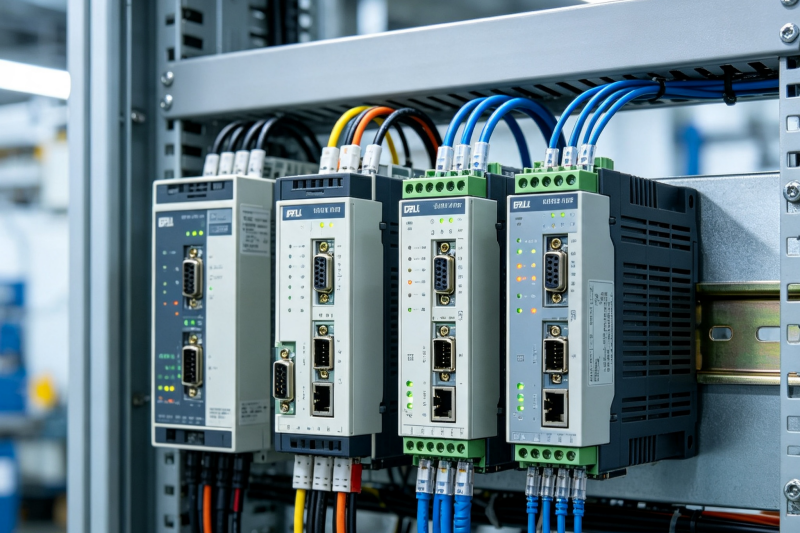
In traditional automation systems, individual devices often communicate with controllers through dedicated point-to-point wiring. Each sensor or switch may require separate conductors, while actuators and other field devices need their own connections. Although this approach can be reliable and straightforward for small machines, extensive wiring can increase installation costs, complicate troubleshooting, and limit flexibility when equipment layouts change.
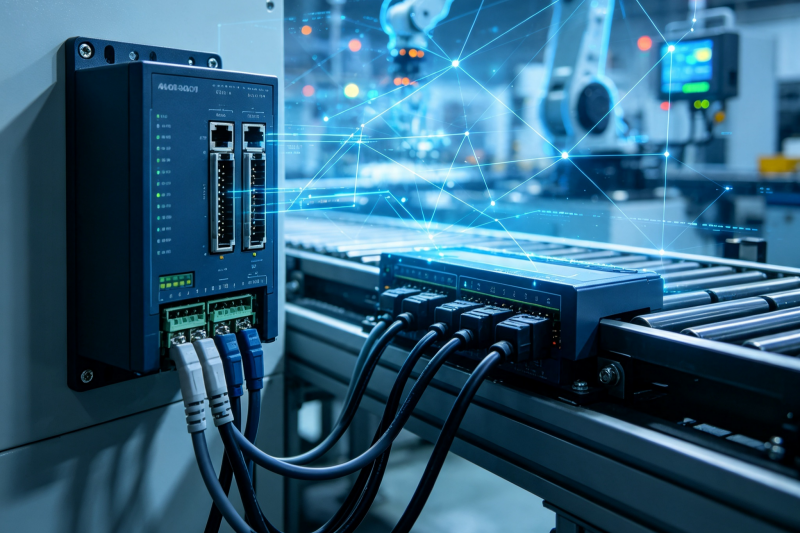
A data bus provides a shared communication pathway through which multiple devices can exchange information according to a defined protocol. Depending on the technology, devices may communicate over a common cable, an industrial Ethernet network, a serial connection, or another supported medium. The architecture determines how devices are addressed, how messages are transmitted, how errors are detected, and how the system responds when communication is interrupted.
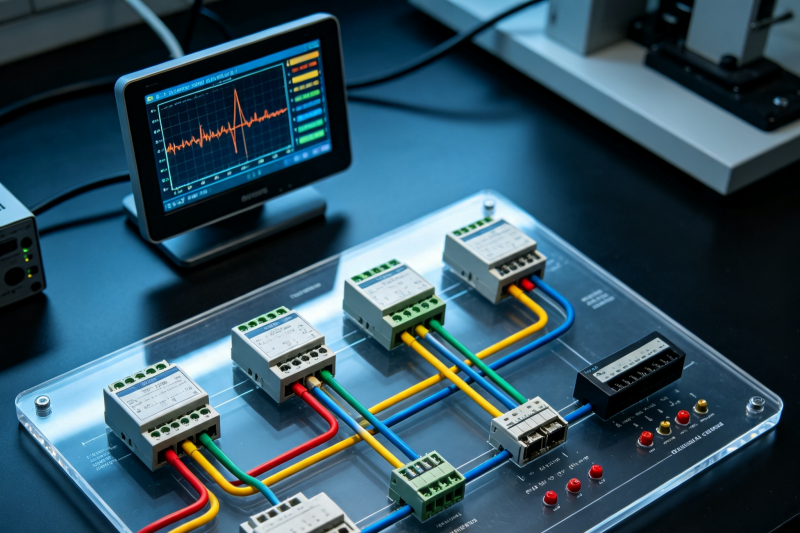
Several industrial communication technologies have established roles in automation. Modbus RTU, commonly implemented over serial links such as RS-485, remains widely used for communication with instruments, meters, drives, and controllers. CAN-based networks are used in various embedded and industrial applications where structured messaging and robust communication are important. PROFIBUS and other established fieldbus technologies continue to operate in many installed systems. Industrial Ethernet solutions, including PROFINET and EtherNet/IP, support communication across modern control networks, while protocols such as EtherCAT are used in applications requiring tightly coordinated real-time control.
These technologies are not interchangeable in every application. They differ in communication speed, timing characteristics, topology, device capacity, diagnostic features, engineering tools, and interoperability requirements. Selecting a suitable data bus therefore requires more than comparing maximum transmission rates. Engineers must evaluate the actual control task, required response time, network size, installation environment, and expected lifecycle of the equipment.
Real-time performance is particularly important in motion control and coordinated machinery. A conveyor system may tolerate certain communication delays when reporting general operating status, whereas a multi-axis machine may require tightly synchronized commands and feedback. If messages arrive too late or with excessive timing variation, motion accuracy and production performance can be affected. Networks intended for demanding control tasks must therefore provide appropriate timing behavior and predictable communication under the expected operating load.
Industrial Ethernet is expanding the possibilities for connecting field devices with higher-level control and information systems. Ethernet-based networks can support communication between controllers, human-machine interfaces, engineering stations, and other industrial devices. With suitable architecture and security controls, production data can also be made available to monitoring, maintenance, and manufacturing execution systems.
According to Automation World’s January 2026 review of industrial connectivity, Ethernet-based networks accounted for 76% of new industrial network node installations in the cited 2025 industry data, while traditional fieldbus systems accounted for 17%. The figures illustrate the continuing shift toward Ethernet-based connectivity, although adoption varies by industry, region, and application.
One important benefit of modern data bus systems is reduced wiring complexity. In a distributed architecture, remote input/output modules can collect signals from groups of sensors and actuators near the equipment they control. The modules then communicate with a controller over a shared network. This arrangement can reduce long individual cable runs, simplify cabinet design, and make machine modules easier to install or replace.
Communication networks can also improve diagnostics. In a conventional hardwired system, a technician may need to trace individual conductors to determine why a device is not responding. A digital network may provide information about communication errors, device status, configuration problems, and operating parameters. Depending on the protocol and equipment, these diagnostic capabilities can help maintenance personnel identify the source of a fault more quickly.
However, the use of a shared network also introduces new engineering responsibilities. Incorrect addressing, mismatched communication settings, unsuitable cable termination, electromagnetic interference, or damaged connectors can disrupt communication among multiple devices. In some architectures, a single network fault can affect several machine functions at once. Network design must therefore account for physical topology, cable routing, grounding, shielding, termination, redundancy, and fault isolation where appropriate.
Cybersecurity has become an increasingly important consideration as industrial networks connect operational technology with enterprise systems and remote services. A network that was previously isolated may become exposed to additional risks when remote access, cloud connectivity, or external monitoring is introduced. Unauthorized access or malicious changes to control messages could affect production availability and, in some circumstances, operational safety.
Manufacturers can reduce these risks through network segmentation, controlled remote access, device authentication where supported, appropriate access permissions, secure configuration management, and timely security updates. Communication between enterprise information systems and real-time control networks should be designed deliberately rather than enabled without considering operational consequences. Security measures must also be compatible with the timing, availability, and maintenance requirements of the industrial environment.
Interoperability presents another challenge. Devices from different suppliers may support the same broad communication standard but still differ in supported functions, configuration methods, data structures, or firmware behavior. An industrial network may therefore require compatibility testing, device description files, engineering tools, and clearly defined integration procedures. Open protocols can reduce dependence on proprietary communication methods, but they do not automatically guarantee that every device will work seamlessly with every controller.
The growth of industrial wireless technologies provides additional options for installations where cables are expensive, difficult to route, or unsuitable for moving equipment. Wireless connections can support mobile machinery, remote monitoring, and temporary production setups. Nevertheless, wireless networks must account for radio interference, latency, coverage, power consumption, and connection reliability. Wired communication remains preferable for many applications requiring predictable timing or high availability.
The concept of a unified industrial data architecture is also gaining attention. Rather than treating every machine network as an isolated system, manufacturers increasingly seek ways to combine operational data from different production areas. OPC UA can provide structured information exchange between industrial systems, while MQTT is frequently used to distribute messages to monitoring and data-processing platforms. These technologies serve different purposes and can complement, rather than necessarily replace, the real-time field networks used for machine control.
The practical objective is not simply to collect more data but to make information useful. Production managers may need machine availability and output figures, maintenance teams may require detailed fault records, and control engineers may need millisecond-level information about specific devices. A well-designed architecture ensures that each application receives the relevant data at an appropriate level of detail and with suitable performance.
As smart manufacturing develops, industrial data bus technologies will continue to provide the communication foundation connecting physical equipment with digital control and analysis systems. Their long-term value will depend on dependable operation, appropriate real-time performance, manageable integration costs, and effective security. Manufacturers that select communication technologies according to actual application requirements can build systems that are easier to maintain, more flexible to expand, and better prepared for future automation upgrades.
Post time: Oct-29-2026