



Industrial switches remain fundamental components of electrical systems, control panels, automated machinery, and industrial equipment. Although switches are often associated with simple on-and-off operations, their functions extend across operator control, position detection, circuit isolation, equipment interlocking, and safety-related applications. As industrial systems become more connected and increasingly automated, switch selection and integration continue to influence equipment reliability, usability, and operational safety.
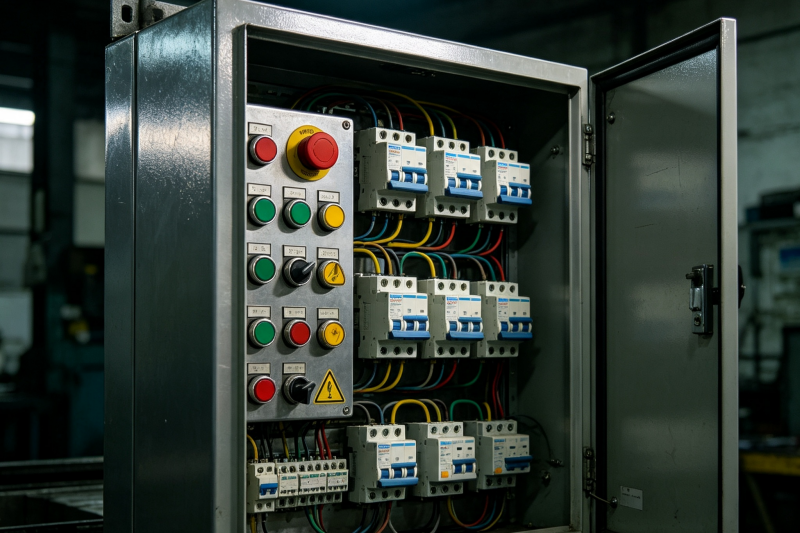
At the most basic level, a switch changes the state of an electrical circuit. Depending on its design, it may open or close a circuit when an operator presses a button, turns a selector, moves a lever, or causes a mechanical actuator to reach a particular position. Other switches respond to magnetic fields, proximity, pressure, or changes in environmental conditions. These different operating principles allow switches to serve a broad range of industrial requirements.
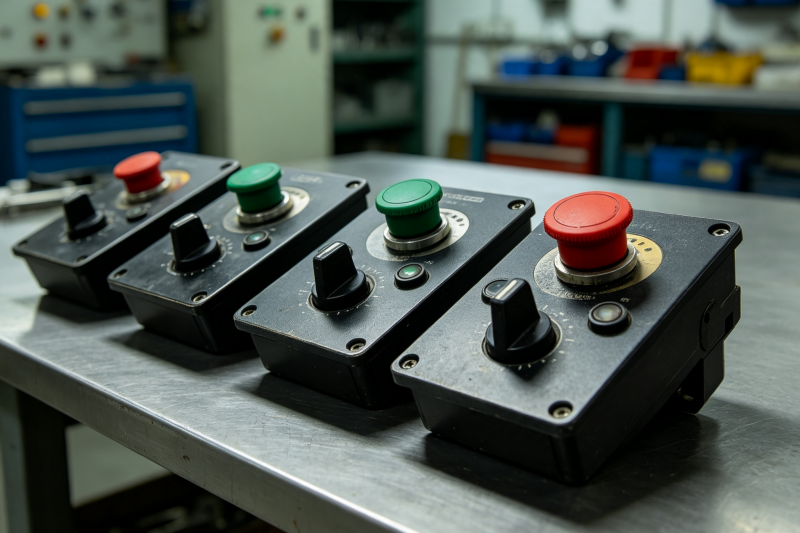
Push-button switches are widely used in operator interfaces. Start, stop, reset, and mode-selection controls provide direct ways for personnel to interact with machinery. Selector switches allow operators to choose between operating modes, while illuminated switches provide visual indications of control status. In many applications, these physical controls remain important even when machines also include touchscreens, programmable displays, or remote monitoring interfaces.
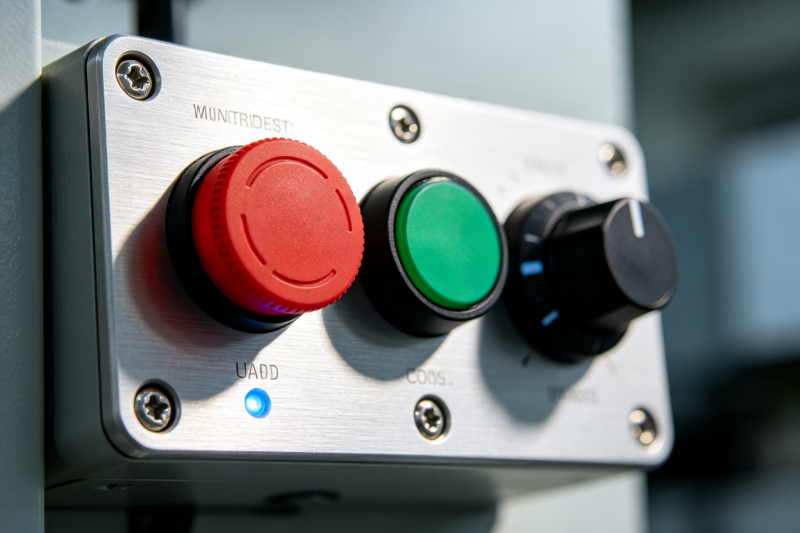
One reason is operational clarity. In environments where operators must respond quickly, clearly identified physical controls can provide a predictable means of interaction. Emergency-stop devices, for example, are designed to allow personnel to initiate an emergency stop function when a hazardous situation arises. They must be appropriately selected, positioned, connected to a suitable safety-related control system, and maintained. An emergency-stop button alone does not guarantee that a machine will stop safely under every condition; the complete system must be designed and validated for its intended function.
Limit switches provide another essential function by detecting the position or movement of mechanical components. They are commonly installed on conveyor systems, machine guards, lifting equipment, and automated assembly mechanisms. When a moving component reaches a predefined point, the switch changes electrical state and sends a signal to the control system. This signal may stop a motor, initiate the next production step, or prevent movement beyond an intended boundary.
Mechanical limit switches are often valued for their straightforward operating principle and clear switching action. However, they contain moving parts that can wear over time, especially when exposed to repeated mechanical impact, contamination, or excessive operating force. Engineers must therefore consider expected switching frequency, mechanical travel, contact ratings, environmental protection, and maintenance requirements.
Non-contact switching technologies offer alternatives in applications where mechanical contact is undesirable. Inductive proximity switches can detect metallic objects without direct physical contact, while capacitive devices can detect a wider range of materials under suitable conditions. Magnetic switches can identify the presence or position of magnets, and optical devices can detect objects by using light. Each technology has different sensing distances, environmental sensitivities, and installation requirements.
For example, inductive proximity switches are frequently used in automated production lines to confirm the presence of metal components. Because they do not require direct mechanical contact with the detected object, they can reduce wear in applications involving repeated movement. However, detection performance depends on factors such as target material, target dimensions, mounting conditions, and the specified sensing distance. A sensor that performs well with one metal target may behave differently with another material or geometry.
Industrial switches must also withstand demanding operating environments. Machinery may expose electrical components to dust, moisture, oil, vibration, temperature variation, and electromagnetic interference. The required enclosure protection, material selection, sealing arrangement, and connector design depend on the installation environment. Equipment intended for washdown areas, outdoor installations, or potentially explosive atmospheres may require specialized products and additional compliance measures.
Electrical ratings are equally important. A switch suitable for a low-current signal circuit may not be appropriate for directly controlling a motor or another high-current load. Engineers need to distinguish between resistive and inductive loads, consider the relevant AC or DC ratings, and evaluate the electrical characteristics of the connected equipment. Switching inductive loads can produce voltage transients that affect contact life and system reliability. Suitable suppression or interface components may therefore be necessary.
The growth of smart manufacturing is also changing how switches are integrated into control architectures. Traditional switches commonly provide a discrete electrical signal indicating an open or closed state. In more advanced systems, switching devices may be connected through remote input/output modules or industrial communication interfaces, enabling centralized monitoring and simplified machine configuration. Intelligent sensing devices can provide additional diagnostic information, although not every industrial switch requires or supports such functionality.
Safety interlocking is another area of continuing importance. Guard switches and interlock devices help control access to hazardous machinery by providing information about the state of protective doors, covers, or movable barriers. Depending on the risk assessment, these devices may form part of a safety-related control system that prevents hazardous motion while access is possible. Their effectiveness depends on suitable device selection, installation, fault detection, and system architecture.
Engineers must also consider the possibility of switch failure. Contacts may become worn, connections may loosen, and mechanical components may become misaligned. In safety-related applications, the design must address relevant failure modes and avoid relying on a single ordinary switch where a more comprehensive protective arrangement is required. Appropriate diagnostics, redundancy, monitoring, and periodic testing may be necessary depending on the assessed risk.
Human factors can influence switch performance just as strongly as electrical specifications. Controls should be clearly labeled, logically positioned, and easy to distinguish during normal operation and emergencies. Color conventions, tactile feedback, illumination, and ergonomic placement can help reduce operator errors. These considerations are particularly important in crowded control panels or machines that require frequent mode changes.
Maintenance and lifecycle planning should be included from the beginning of a project. A switch that is inexpensive to purchase may create higher overall costs if it requires frequent replacement or is difficult to access. Standardized components, clear wiring documentation, replaceable mounting arrangements, and appropriate spare-parts planning can simplify service activities.
As industrial systems continue to adopt digital controls and more flexible production methods, switches will remain indispensable interfaces between people, machines, and electrical circuits. Their development may involve improved durability, more compact designs, enhanced diagnostics, and easier integration with connected systems. Nevertheless, the fundamental priorities remain unchanged: selecting the correct switching principle, ensuring electrical and mechanical compatibility, maintaining dependable operation, and integrating the device into a properly engineered control system.
Post time: Oct-29-2026