



The global agricultural industry is entering a new phase of technological innovation as growers seek more efficient and sustainable methods of food production. Climate change, increasing demand for fresh produce, limited arable land, and rising labor costs have created significant challenges for both commercial growers and agricultural enterprises. In response, smart greenhouse technology has emerged as one of the most promising solutions for modern agriculture. By integrating Internet of Things (IoT) devices, intelligent sensors, cloud computing, artificial intelligence, and automated environmental control systems, smart greenhouses provide growers with unprecedented precision in managing crop production. These advanced facilities enable farmers to maximize yields, improve product quality, reduce resource consumption, and maintain stable production throughout the year regardless of external weather conditions.
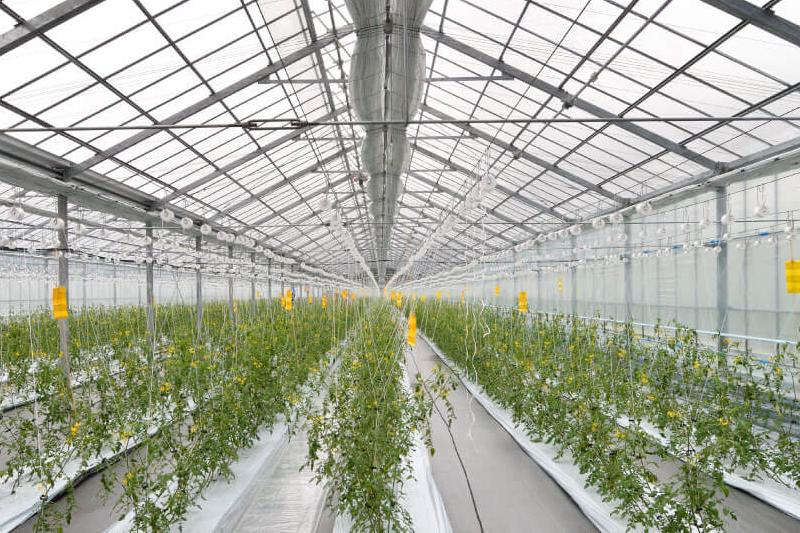
Unlike conventional greenhouses that rely heavily on manual operation, smart greenhouses continuously monitor and regulate environmental conditions through interconnected sensors and automated control equipment. Temperature, humidity, light intensity, carbon dioxide concentration, soil moisture, nutrient levels, and irrigation status can all be monitored in real time using highly accurate digital sensors. The collected data is transmitted through wireless communication technologies such as Wi-Fi, LoRaWAN, Zigbee, NB-IoT, or LTE networks to cloud-based management platforms, where operators can remotely monitor greenhouse conditions using computers or mobile applications. This level of automation significantly reduces manual labor while ensuring crops are consistently maintained under optimal growing conditions.
Environmental control represents one of the greatest advantages of intelligent greenhouse systems. Automated ventilation equipment, cooling fans, heating systems, shading curtains, LED grow lights, misting systems, and irrigation equipment work together to maintain the ideal microclimate for different plant varieties. Instead of relying on fixed operating schedules, modern greenhouse controllers continuously analyze sensor data and automatically adjust environmental parameters according to real-time crop requirements. During periods of excessive heat, ventilation and cooling systems activate automatically to prevent plant stress, while supplemental lighting and heating systems ensure healthy plant development during colder seasons or periods of limited natural sunlight. This precise environmental regulation allows growers to achieve higher crop quality while minimizing energy consumption.
Water management has become another critical area where smart greenhouse technology delivers substantial benefits. Agriculture accounts for a significant proportion of global freshwater consumption, making efficient irrigation increasingly important as water resources become more limited. Smart irrigation systems utilize soil moisture sensors, weather forecasting data, evapotranspiration models, and plant growth analysis to determine the exact amount of water required at any given time. Automated drip irrigation and fertigation systems deliver water and nutrients directly to plant roots with exceptional accuracy, reducing waste while improving nutrient absorption. Compared with conventional irrigation methods, intelligent greenhouse irrigation can significantly reduce water consumption while maintaining consistent crop growth and improving overall productivity.
Artificial intelligence is rapidly becoming one of the most influential technologies driving the evolution of smart greenhouse systems. Advanced machine learning algorithms analyze large volumes of environmental and production data to identify patterns that would be difficult for human operators to recognize. AI-powered platforms can predict irrigation requirements, estimate crop yields, optimize fertilizer application, and recommend environmental adjustments based on historical performance and current growing conditions. Computer vision systems equipped with high-resolution cameras can automatically detect plant diseases, nutrient deficiencies, insect infestations, and abnormal growth at early stages, allowing growers to take corrective action before production losses occur. Predictive analytics also supports production planning by forecasting harvest dates and estimating market supply more accurately.
Remote management capabilities have become increasingly valuable for commercial greenhouse operators managing multiple production sites. Cloud-based greenhouse management platforms provide centralized dashboards that display real-time environmental data, equipment operating status, alarm notifications, and historical performance reports from every greenhouse within an organization. Operators can remotely adjust temperature settings, irrigation schedules, lighting intensity, and ventilation parameters from virtually any location using smartphones or web-based applications. Automatic alerts notify management personnel whenever environmental conditions exceed predefined thresholds or equipment malfunctions occur, enabling rapid intervention that minimizes crop damage and reduces operational risks. These remote monitoring capabilities improve management efficiency while lowering labor requirements across large-scale agricultural operations.
Sustainability has become a defining characteristic of modern smart greenhouse technology. By precisely controlling environmental conditions and resource utilization, intelligent greenhouse systems significantly reduce energy consumption, water usage, fertilizer waste, and chemical pesticide applications compared with traditional farming methods. Many commercial greenhouse facilities are now integrating renewable energy sources such as solar panels, geothermal heating, and energy storage systems to further reduce operating costs and carbon emissions. Rainwater harvesting systems, closed-loop irrigation, and water recycling technologies are also becoming increasingly common, supporting environmentally responsible agricultural production while improving long-term economic performance. As governments continue promoting sustainable agriculture through financial incentives and environmental regulations, investment in intelligent greenhouse infrastructure is expected to accelerate worldwide.
The rapid expansion of robotics and automation is further transforming greenhouse operations. Autonomous mobile robots are increasingly being deployed for planting, harvesting, pruning, spraying, and internal transportation tasks, helping growers address persistent labor shortages while improving operational consistency. Automated guided vehicles transport harvested produce efficiently throughout greenhouse facilities, while robotic harvesting systems equipped with machine vision can identify ripe fruits and vegetables with remarkable accuracy. These technologies reduce physical labor requirements while improving harvesting speed, product quality, and operational efficiency. As robotics continue to mature, fully automated greenhouse production systems are becoming increasingly achievable for high-value commercial crops.
Looking ahead, smart greenhouses are expected to play a central role in ensuring global food security while supporting more sustainable agricultural practices. Continued advances in artificial intelligence, edge computing, digital twins, and next-generation wireless communication will enable even greater levels of automation and decision support. Future greenhouse systems will increasingly integrate autonomous robots, predictive climate control, advanced biological monitoring, and real-time supply chain connectivity into a unified agricultural ecosystem capable of responding dynamically to changing environmental and market conditions. As population growth continues to increase pressure on food production, smart greenhouse technology offers a practical pathway toward higher agricultural productivity, improved resource efficiency, and year-round production of high-quality crops. By combining intelligent automation with data-driven decision-making, smart greenhouses are redefining the future of modern agriculture and creating new opportunities for growers around the world.
Post time: Jun-27-2026